
Ticks on dogs and ehrlichiosis
How to remove a tick without leaving the head, how to get them out of your home and which signs point to ehrlichiosis. This guide doesn't replace a vet: your vet picks the treatment.
Reviewed by Paola De Valeri, veterinarian, October 17, 2026.
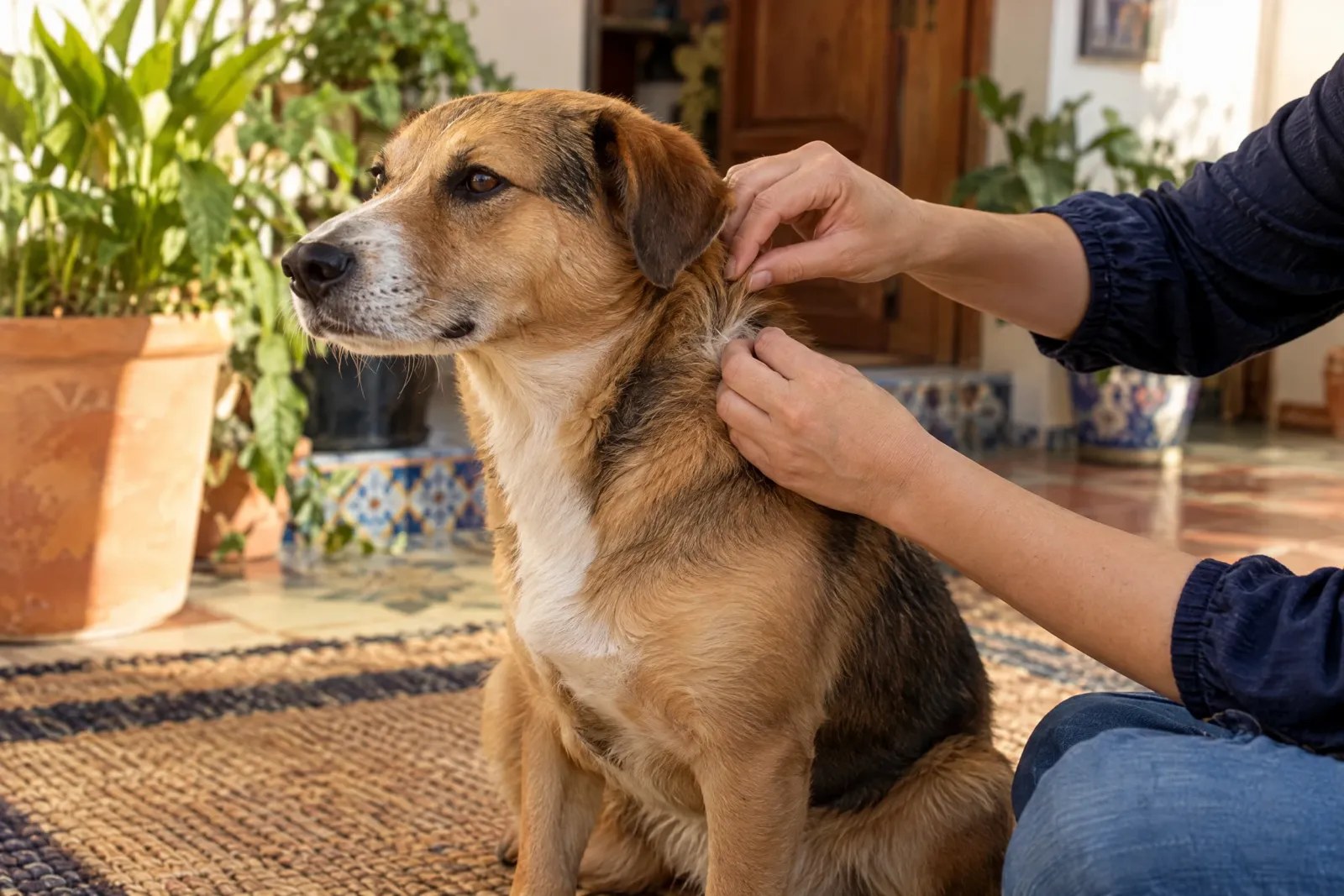
Why they matter
The brown dog tick lives inside homes and breeds all year where it's warm. A single female lays thousands of eggs in cracks, beds and walls, which is why an infestation takes time to clear.
Besides itching, ticks transmit diseases like ehrlichiosis and anaplasmosis, which are common in Mexico and can be serious if not treated in time. A dog gets infected when an infected tick bites it and stays attached: that's why it matters to remove ticks early and use tick prevention all year.
How to remove a tick
- 1. Use fine tweezers or a tick hook. Grab it as close to the skin as possible, without squeezing its body.
- 2. Pull straight out, steady and without twisting. If a tiny piece stays in the skin, don't dig: it usually comes out on its own. If it gets swollen, see your vet.
- 3. Clean the area and wash your hands. Drop the tick in alcohol or onto sticky tape. Don't crush it with your fingers.
What doesn't work
- Burning them, or putting oil, petroleum jelly, gasoline or alcohol on them while attached.
- Yard products or products for people applied to the dog: they can poison it.
Signs of ehrlichiosis
- Fever, lethargy and loss of appetite a few weeks after having ticks.
- Nosebleeds, or bruises and tiny red dots on the skin or gums.
- Weight loss, swollen lymph nodes or weakness in the back legs: it struggles to get up, walk or climb stairs.
It's diagnosed with blood tests. If it's caught early, it can be treated; in the chronic phase it can no longer be cured: it can go inactive and become active again.
How to prevent them and get them out of your home
- A flea and tick preventive all year, the one your vet recommends.
- Check ears, neck, armpits and between the toes after every walk.
- Wash its bed and blankets in hot water, and vacuum cracks, baseboards and corners.
- If there are many, treat every dog in the home at the same time and consider pest control.
- A checkup with your vet every year.
- Blood tests 2 to 3 times a year, especially if it lives where there are many ticks: they detect ehrlichiosis before there are signs.
Frequently asked questions
- How do I get rid of ticks on my dog?
- Remove the ones you see with fine tweezers, pulling steadily without twisting, and use the tick preventive your vet recommends. Wash its bed and vacuum the house: most ticks are in the environment, not on the dog.
- Do dog ticks bite humans?
- They can climb onto people, although the brown dog tick prefers dogs. If you find one on your skin, remove it the same way, with tweezers, and wash up.
- Can ehrlichiosis in dogs be cured?
- If it's caught early, yes, with the treatment your vet prescribes. In the chronic phase it can no longer be cured: treatment can make it inactive, but it can become active again. That's why you should go as soon as you see signs and keep up with blood tests.
- Is ehrlichiosis contagious?
- It doesn't pass from dog to dog by contact: ticks transmit it. If one dog in the home has it, check and protect the others.
Related guides
- How often to deworm a dog or a catHow often to deworm a dog or cat by age, and signs that it has parasites.
- Screwworm in dogs and cats in MexicoSigns of screwworm in dogs and cats, what to do with a wound, where to report it and how it affects travel.
Wagori: everything for your pet, in one app
Keep its vaccine record, find vets and trusted services, and see events near you. It's free. The app is in Spanish for now.
Works in the browser on your phone or computer. The app is in Spanish for now.
Sources
Information from: