
Screwworm in dogs and cats in Mexico
How to recognize it, what to do if you see larvae in a wound, how to protect your pet during Mexico's outbreak and what it means for travel. This guide doesn't replace a vet.
Reviewed by Paola De Valeri, veterinarian, October 17, 2026.
What it is and why it affects dogs
New World screwworm (gusano barrenador) is the larva of a fly that lays its eggs in open wounds or body openings of warm-blooded animals. The larvae feed on living tissue and make the wound bigger within days.
Since late 2024 there has been an outbreak in Mexico that started in the southeast and has reached several states, including Mexico City. After cattle, dogs are the animals with the most cases. Your dog doesn't need to be near cows: an uncovered wound where there are flies is enough.
Warning signs
- Larvae (white or pinkish worms) inside a wound.
- A wound that won't heal, grows or bleeds.
- A bad smell coming from the wound, ears, nose or genitals.
- Licking, scratching or biting one spot nonstop.
- Lethargy, pain when touched or not eating.
If you see any of these signs, take it to the vet the same day.
What to do if you see larvae in a wound
- 1. Don't remove them yourself. If larvae stay inside, the wound keeps growing. Don't use home remedies, gasoline, lime or insecticides either: they hurt the tissue and can poison your pet.
- 2. Take it to the vet right away. Cover the wound with clean gauze for the trip. The vet removes all the larvae, cleans the wound and gives the treatment it needs.
- 3. Report it to SENASICA. Reporting is mandatory. Call 800 751 2100 (Mexico toll-free) or use the AVISA app. Your vet can also file the report.
How to prevent it
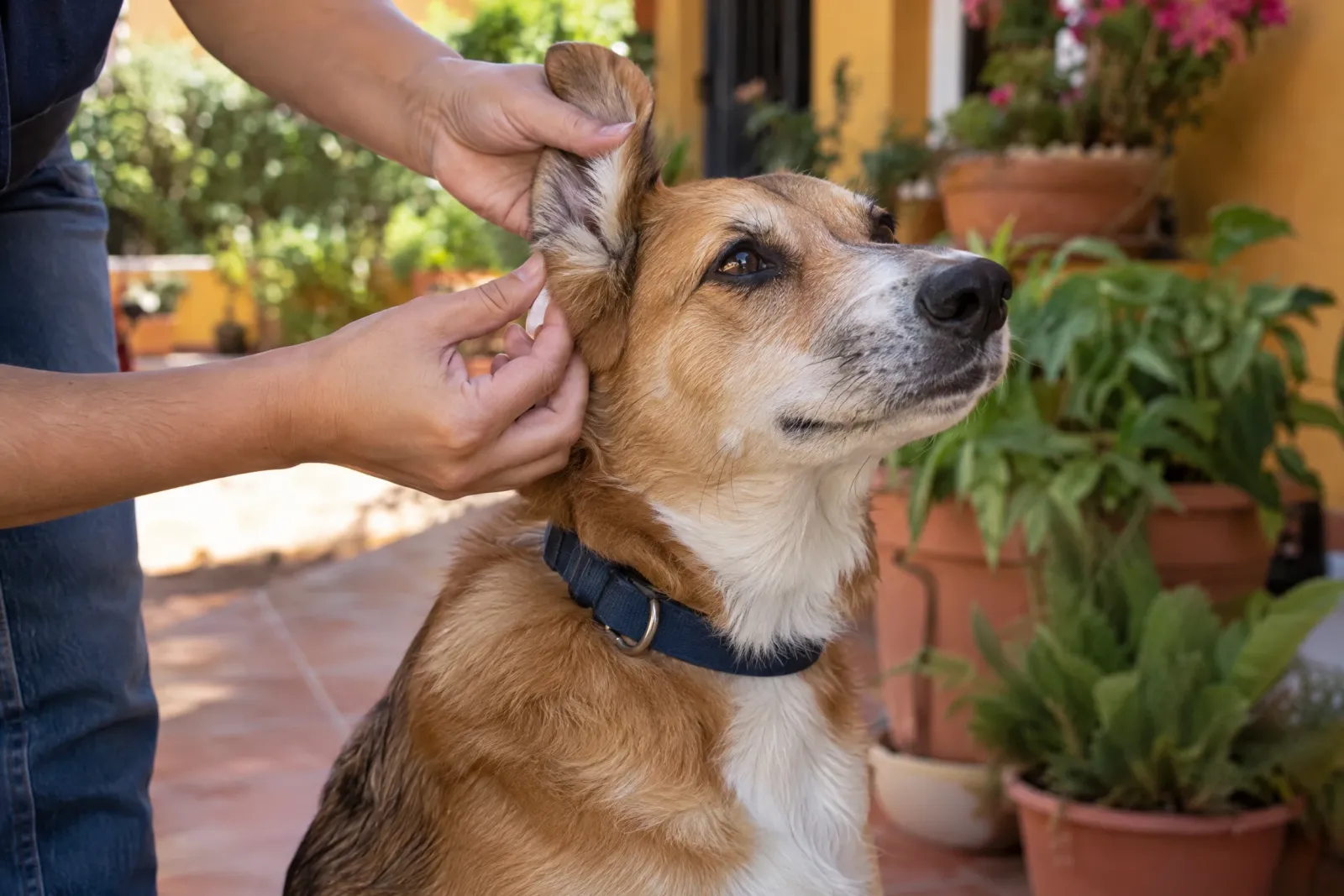
- Check your dog or cat every day: skin, ears, paws, tail, snout, belly button and genitals.
- Clean and cover every wound, however small, until it heals. Ask your vet what product to use.
- If it licks or scratches the wound, use a cone (e-collar).
- Pay special attention to newborn puppies (belly button), females that just gave birth, and pets after surgery or a recent fight.
- Keep its vaccines and deworming up to date, and don't let it roam the street.
Screwworm and travel between Mexico and the US
- Dogs flying or driving from the US into Mexico need a screwworm inspection certificate signed by a USDA-accredited vet within 5 days before the trip (since August 3, 2026). Cats don't.
- Dogs going from Mexico to the US need a certificate from a SENASICA-authorized vet stating they were inspected and found free of screwworm within 5 days before the trip.
- Full requirements, including the CDC form, are in our guide to bringing a dog to Mexico.
Travel rules change with the outbreak. Check SENASICA and USDA APHIS before you travel.
Frequently asked questions
- How does a dog get screwworm?
- A fly lays its eggs in an open wound or a body opening. It doesn't pass from dog to dog by contact: the risk is any uncovered wound where there are flies.
- Can screwworm in dogs be cured?
- Yes, if treated in time. The vet removes all the larvae and treats the wound. Without treatment the wound grows fast and can be fatal.
- Can humans get it?
- People can get screwworm too if they have an open wound exposed to flies, but your dog doesn't pass it to you directly. If you have a wound that won't heal, see a doctor.
- Can I travel with my dog between Mexico and the US because of screwworm?
- Yes, with a screwworm inspection certificate issued within 5 days before the trip: by a USDA-accredited vet going into Mexico, and by a SENASICA-authorized vet coming back into the US.
Related guides
- Bringing a dog to Mexico: requirements in 2026Requirements to bring a dog or cat to Mexico from the US or Canada in 2026, and to take it back to the US.
- Ticks on dogs and ehrlichiosisHow to remove ticks from your dog, get them out of your home and spot ehrlichiosis.
- How often to deworm a dog or a catHow often to deworm a dog or cat by age, and signs that it has parasites.
Wagori: everything for your pet, in one app
Keep its vaccine record, find vets and trusted services, and see events near you. It's free. The app is in Spanish for now.
Works in the browser on your phone or computer. The app is in Spanish for now.
Sources
Information from: