
New
Holidays with your pet in Mexico
The essentials for posadas, Christmas and New Year's: fireworks, food from the table and keeping your pet from getting lost. A summary of our guides reviewed by Paola De Valeri.
Reviewed by Paola De Valeri, veterinarian, October 17, 2026.
Fireworks: before the fiestas
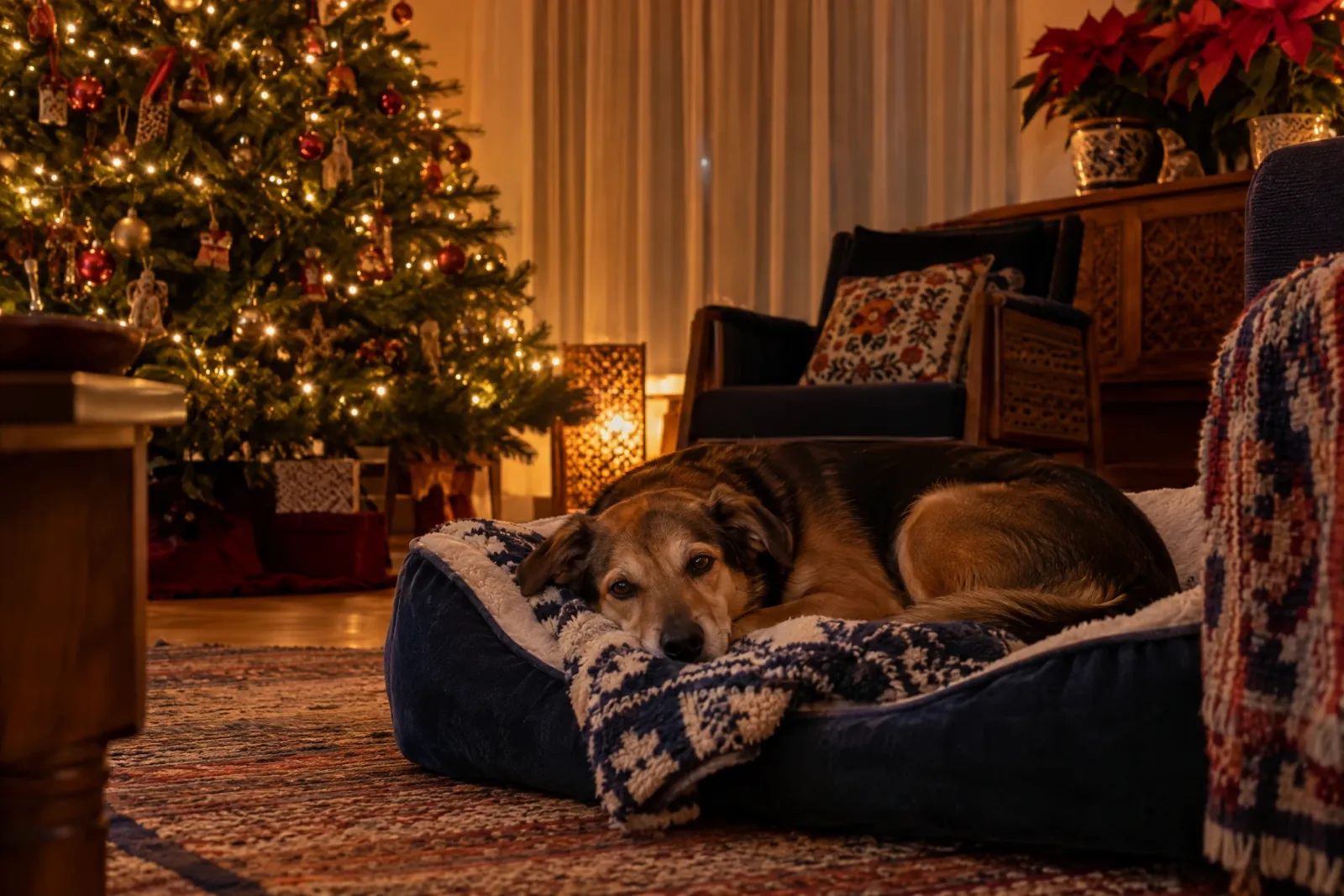
- 1. Set up a den. A quiet corner inside with its bed, a blanket over it and its toys. Let it use it for days before, not just that night.
- 2. Make sure it can't escape. A tag with your phone number, a registered microchip and doors, windows and gates closed. Many dogs get lost on these dates.
- 3. Walk it during the day. A long walk before the fireworks start, always on a leash.
- 4. Talk to your vet ahead of time. If the fear is strong, your vet may prescribe something for those nights. Don't give it human medicine or sedatives on your own.
Fireworks: while they go off
- Close windows and curtains, and play music or the TV to cover the noise.
- Stay close and calm. If it comes to you, comfort it: comforting doesn't reinforce its fear.
- Don't force it out of its hiding spot or scold it.
- Offer a toy or a treat, but don't insist if it doesn't want it.
- Never leave it tied up outside, on the rooftop or in the car.
More on fear of fireworks
At posadas and Christmas: what it shouldn't eat
- Chocolate and cocoa: the darker, the more dangerous.
- Grapes and raisins: they can damage its kidneys, even in small amounts.
- Onion, garlic, chives and leeks, raw, cooked or powdered (also in broths and stews).
- Cooked chicken or beef bones: they splinter and can perforate the intestine.
- Tamale husks, toothpicks and whole corn cobs: they get stuck in the intestine.
- Chicharrón, carnitas and very fatty or spicy food: they can cause pancreatitis.
- Pan de muerto, rosca de reyes and desserts: sugar, fat and sometimes raisins or chocolate.
If it ate something from the table
- 1. Call your vet right away. Even if it has no symptoms: chocolate, grapes and xylitol cause harm hours later.
- 2. Have the details ready. What it ate, how much, what time and the package if you have it. With your dog's weight, the vet works out the risk.
- 3. Don't make it vomit on your own. And don't give it salt, oil or milk. Only if your vet says so.
What it can and can't eat
Keep it from getting lost
- A tag on its collar with your Mexican phone number (or WhatsApp).
- A microchip with current details: it only works if the registration is up to date.
- Its RUAC registration, if you live in Mexico City.
- Recent photos on your phone, front and full body.
- Check doors, windows and gates, especially with cats and on days with fireworks or parties.
If it gets lost
A new pet for the holidays?
- 1. Think about your routine and your space. A dog or cat lives 10 to 18 years. Consider time, space, food and vet costs, whether your building allows pets and what happens if you move countries.
Where to adopt
Frequently asked questions
- What do I do with my dog on New Year's because of fireworks?
- Set up a quiet hiding spot indoors days before, walk it in daylight on a leash, close windows and curtains and put on music or the TV. If the fear is strong, talk to your vet ahead of time.
- What can't my dog eat at Christmas?
- Chocolate, grapes and raisins, onion and garlic, cooked bones, tamale husks, chicharrón and very fatty or spicy food, and no rosca or desserts. If it ate something toxic, call your vet right away.
- How do I keep my pet from getting lost during the holidays?
- An ID tag with your phone number, a microchip with current details, recent photos on your phone and closed doors, windows and gates, especially on days with fireworks or parties.
Related guides
- My dog is scared of fireworks: what to doHow to help a dog scared of fireworks before, during and after Mexico's fiestas.
- What dogs can eat and what's toxicFruits and foods dogs can eat, the toxic ones and what to do if your dog ate one.
- Lost dog or cat in Mexico: what to doWhat to do if your dog or cat gets lost in Mexico: first hours, a poster in Spanish, where to post and official contacts.
Wagori: everything for your pet, in one app
Keep its vaccine record, find vets and trusted services, and see events near you. It's free. The app is in Spanish for now.
Create your free account
Works in the browser on your phone or computer. The app is in Spanish for now.
Sources
The same sources as the guides each section comes from:
- RSPCA: keeping your pets safe during fireworks
- AVSAB: position statements on animal behavior
- ASPCA: people foods to avoid feeding your pets
- Merck Veterinary Manual: chocolate toxicosis
- VCA: grape and raisin poisoning in dogs
- AKC: human foods dogs can and can't eat
- AGATAN: Ayúdame a regresar a casa (in Spanish)
- AGATAN: borough animal care areas (in Spanish)
- N+: Metro Canine Transfer Center (in Spanish)
- Eje Central: Guadalajara Animal Protection (2026, in Spanish)
- Círculo Rojo: Monterrey Animal Welfare, 072 and WhatsApp (in Spanish)
- Huang et al. (2018), Animals: where lost cats are found
- Animal Care Agency: adoptable pets (in Spanish)
- PAOT: AdoptaCDMX (in Spanish)
- ADN40: requirements to adopt a dog rescued in the Metro (in Spanish)
- CDC: entry requirements for dogs from low-risk countries
- USDA APHIS: bring a pet dog into the United States